
ServicesFillings
Fillings in Shrewsbury, MA
When a cavity is small, a filling stops it before it reaches the nerve. We remove the decay, rebuild the tooth with tooth-colored composite shaded to match, and check your bite before you leave. You will know how long the visit runs and what, if anything, comes next.
What a filling does, and when it is the right call
A filling replaces the part of a tooth that decay or a small fracture has damaged. Caught early, a cavity usually needs only a modest filling. Left alone, it spreads through the softer dentin underneath and can reach the pulp, which is when a crown or an extraction starts to enter the conversation.
Most of our fillings use composite resin, a tooth-colored material placed in thin layers and hardened with a curing light. It bonds to the enamel, so we can often keep more healthy tooth than older approaches allowed. When a cavity is too large for a filling to hold up, we say so and explain why a crown may serve you better.
We also plan around your calendar. Before the visit you will know roughly how long you will be in the chair. If we find more decay than expected, we stop, explain what we see and let you decide whether to continue or book a second visit.
What your filling visit includes
- A close look at the tooth first
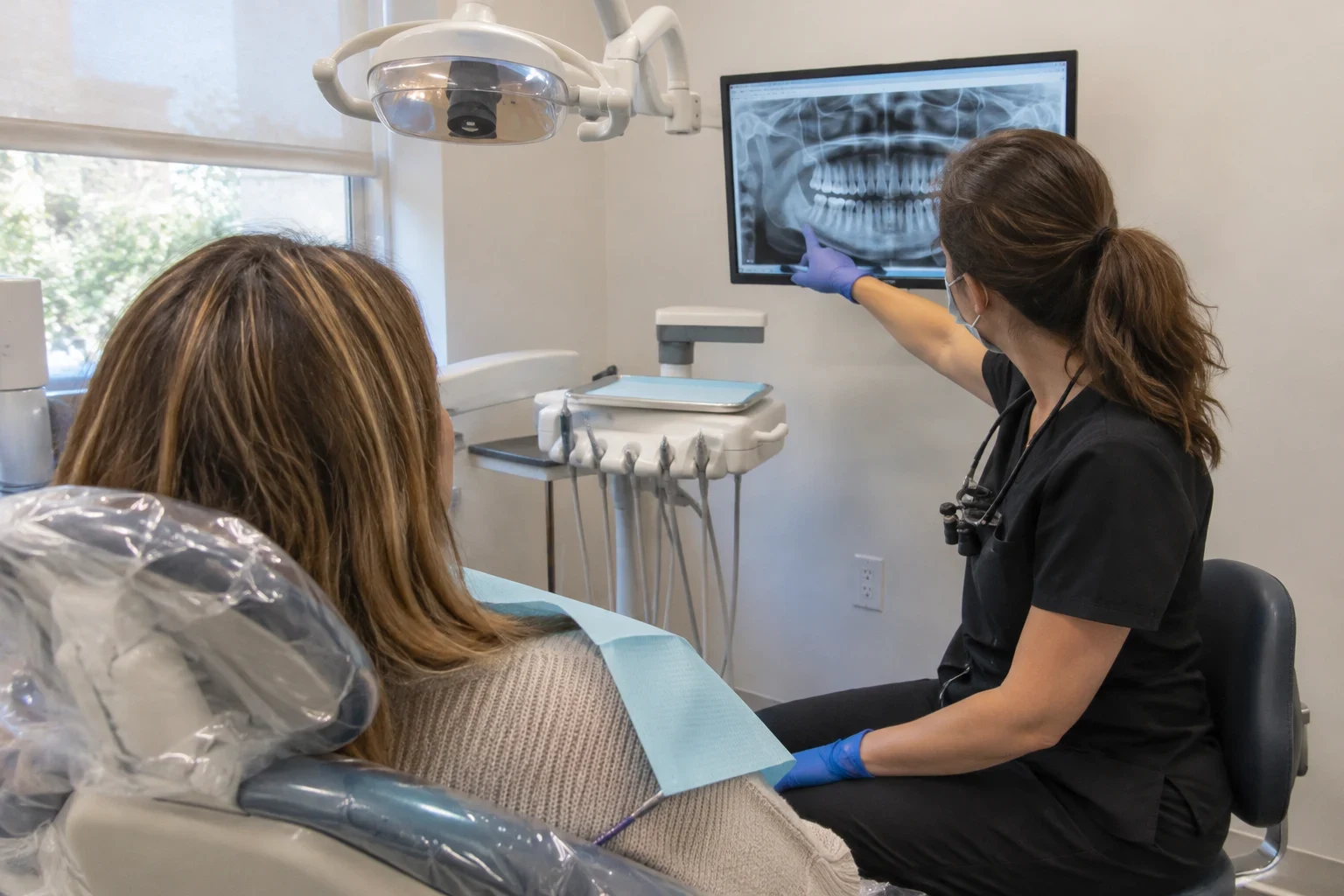
- We confirm the cavity with an exam and, where needed, an X-ray, so the filling matches what is really there. If you have recent X-rays, we work from those.
- Numbing given time to work
- A topical gel goes on before the injection, and we wait until the area is fully numb before starting. If you feel anything, tell us and we pause.
- Careful removal of decay
- Only the soft, damaged tooth comes out. Healthy enamel stays, which keeps the tooth stronger over the long run.
- Layered, shade-matched composite
- We choose a shade against your neighboring teeth, then build the filling in layers, curing each one before the next. The final shape follows the tooth's own grooves so it chews naturally.
- Bite check and polish
- You bite on marking paper so we can find any high spots. We adjust and polish until the surface feels smooth to your tongue.
- Clear aftercare notes
- Before you go, we tell you when the numbness should wear off, what to eat first and what kind of sensitivity is normal.
Signs a tooth may need a filling
A twinge with sweets or cold
A brief, sharp sensitivity to sugar or cold drinks often points to decay that has worked through the enamel.
Food catching in one spot
Floss that shreds, or food that keeps packing between the same two teeth, can mean a cavity or a broken edge on an old filling.
A dark spot or rough edge
Brown or gray areas, or a chip you can feel with your tongue, are worth a look before they grow.
An old filling that looks worn
Older fillings can crack or pull away at the margins, letting decay start underneath. Replacing one early is usually simpler than repairing the tooth later.
Pain when you bite
Discomfort on chewing can come from a cavity, a cracked tooth or a filling that sits high. We sort out which one it is before recommending anything.
What affects the cost of a filling
You see an estimate before any work begins, based on what the exam and X-rays show. The size of the filling drives most of the fee, and your coverage sets how much of it falls to you. We accept most dental insurance plans. If you have no coverage, our Office Dental Plan was set up for patients like you, and the CareCredit Patient Payment Plan lets you pay over time.
Number of surfaces
A cavity on one surface calls for a smaller filling than one that wraps around two or three sides of the tooth. More surfaces mean more material and more time in the chair.
Which tooth
Back molars are harder to reach and carry more chewing force, so the work there is more involved than on a front tooth.
Replacing an old filling
Taking out an existing filling and any decay hiding beneath it adds steps compared with filling a tooth for the first time.
Your insurance or plan
Coverage for fillings varies from one plan to the next. We can go over your benefits with you before the visit, so the figure you hear on the phone matches what you see at checkout.
How the appointment runs
- 1
Booking a realistic time block
When you call, we ask which tooth is bothering you and book a slot sized to the work. One small filling takes far less chair time than several on one side, and we tell you which to expect.
- 2
Check-in and numbing
We review your health history, confirm the tooth and numb the area. Much of the quiet time in a filling visit happens here, giving the anesthetic time to settle.
- 3
Cleaning out and rebuilding
We remove the decay, prepare the tooth and place composite in layers with a curing light. If the cavity turns out deeper than the X-ray suggested, we stop and talk it through with you before going further.
- 4
Finishing and next steps
We adjust the bite, polish and go over aftercare. If other teeth need work, we lay out a treatment plan with the order of visits so you can plan around work and school.
Questions about fillings
How long does a filling appointment take?
It depends on the size and number of fillings. A single small filling is a short visit, while several fillings on one side take longer. We give you a realistic time block when you book, so you can plan the rest of your day around it.
Can I eat after a filling?
Composite hardens fully under the curing light, so the filling itself is ready right away. The bigger concern is the numbness. Wait until feeling returns so you do not bite your cheek or tongue, and start with something soft.
Is it normal for the tooth to feel sensitive afterward?
Some sensitivity to cold or biting pressure for a few days is common, especially after a deeper filling. If it gets worse instead of better, or your bite feels high, call us. A small bite adjustment often settles it.
Do you place fillings for children as well as adults?
Yes. We fill teeth for adults and children. With younger patients we take a slower pace and explain each step, and our Kids' Dentistry page covers more about how those visits run.
What if I need more than one filling?
We show you which teeth need attention and in what order, starting with the ones closest to causing trouble. Some patients prefer one longer visit, others two shorter ones. We build the schedule around what works for you, and if anything changes we let you know before your appointment.
Take care of the cavity while it is still small
Tell us which tooth is bothering you and when you are free. We will book a visit sized to the work and let you know what to expect before you arrive.