ServicesCrowns & Bridges
Crowns & Bridges in Shrewsbury
A crown protects a tooth that a filling can no longer hold together. A bridge replaces a missing tooth by anchoring to its neighbors. We map out both visits before we begin, so you know how long the work takes and when you will be back in the chair.
When a crown or bridge is the right answer
Teeth that have been cracked, worn down or rebuilt with large fillings over the years lose strength at the edges. A crown covers the whole visible tooth, spreading biting force evenly so the remaining structure stops flexing and splitting. We recommend one when the tooth is sound at the root but can no longer be trusted to hold a filling, and we will tell you plainly when a simple filling is still enough.
A bridge fills the space left by one or more missing teeth. The teeth on either side are shaped and crowned, and a replacement tooth is joined between them as a single piece. Closing the gap keeps neighboring teeth from drifting and makes chewing on that side comfortable again.
Most crowns and bridges take two visits with a few weeks between them while the final restoration is made. We set both appointments at the start, and patients coming from Worcester or Westborough can plan travel around a schedule that is written down, not guessed.
What your crown or bridge includes
- Exam and X-rays first
- We check the root, the surrounding gum and the bone before recommending anything. If a tooth is better removed, we say so and walk you through the options on our Extractions page.
- A written treatment plan
- You leave the first conversation knowing which teeth are involved, what material we suggest and how many visits it will take. Questions are welcome before anything is scheduled.
- Material chosen for the tooth
- Back teeth that do heavy chewing often get a strong zirconia or metal-supported crown. Front teeth usually get porcelain or ceramic that lets light through the way natural enamel does.
- Shade matching
- We match the shade to your neighboring teeth in natural light. If you are planning teeth whitening, it is best done first, because a crown keeps its color and will not lighten later.
- A well-fitted temporary
- Between visits you wear a temporary crown or bridge shaped to protect the prepared teeth and let you eat and smile normally.
- Bite adjustment at delivery
- We check how the new restoration meets the opposing teeth and polish any high spots before it is cemented, so it feels like part of your bite.
Signs a tooth may need a crown or bridge
A crack you can feel
A sharp edge, a line you can see in the mirror or a twinge when you release a bite often points to a cracked tooth. Covering it early can keep the crack from reaching the root.
A filling larger than the tooth
When most of a tooth is filling material, the thin walls left around it tend to break off. A crown holds everything together.
Pain when chewing on one side
Pressure pain that comes and goes can mean the tooth is flexing under load.
After a root canal
Back teeth that have had root canal treatment become brittle, and a crown is usually advised to protect them.
A gap that has been there a while
Neighboring teeth slowly tip into an empty space, and the tooth above can drop down. A bridge holds everything in place before the bite shifts further.
How the visits run
- 1
Consultation and timeline
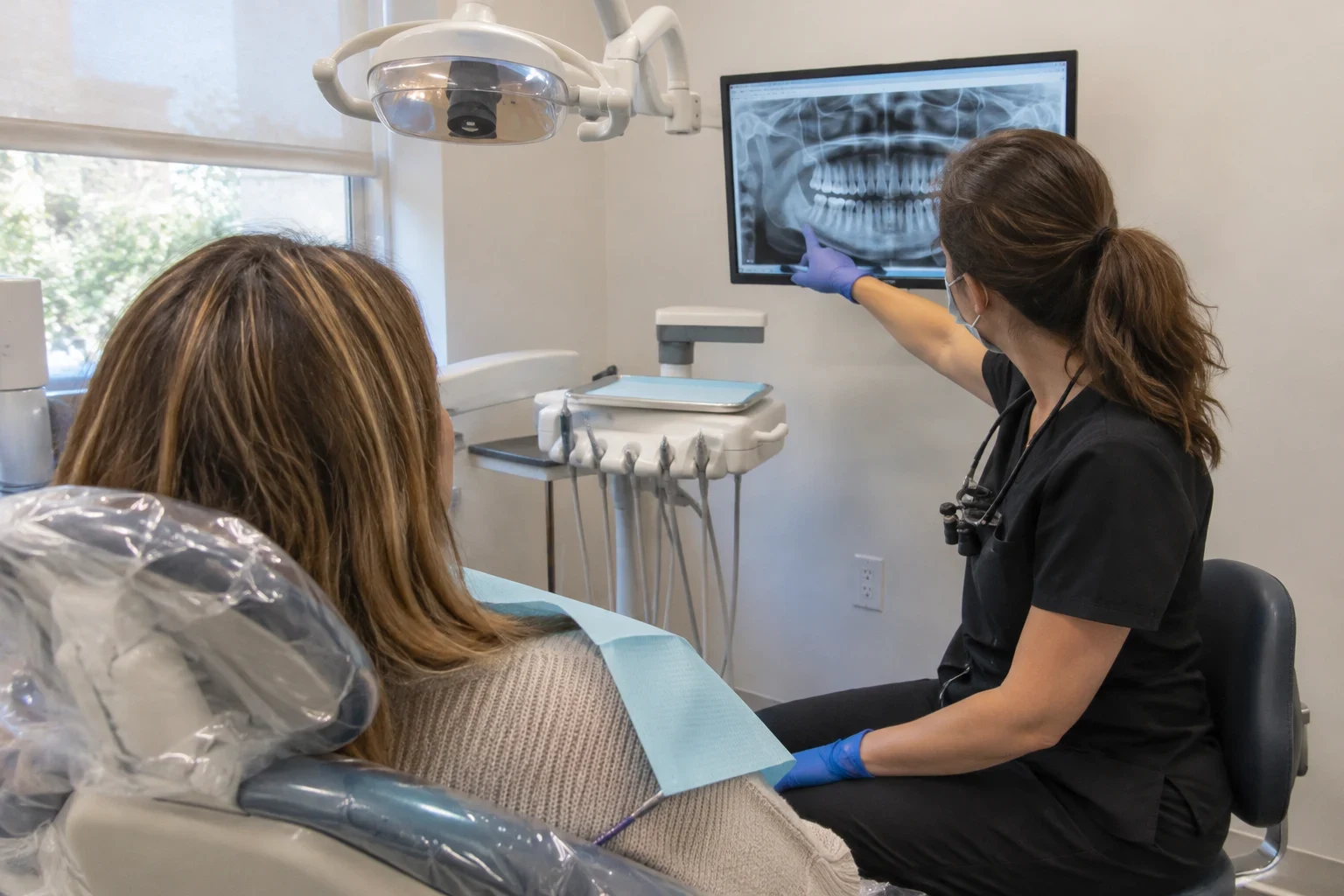
We examine the tooth, take X-rays and talk through crown or bridge options. Before you leave, both treatment visits are on the calendar with a realistic gap for the lab.
- 2
Preparation visit
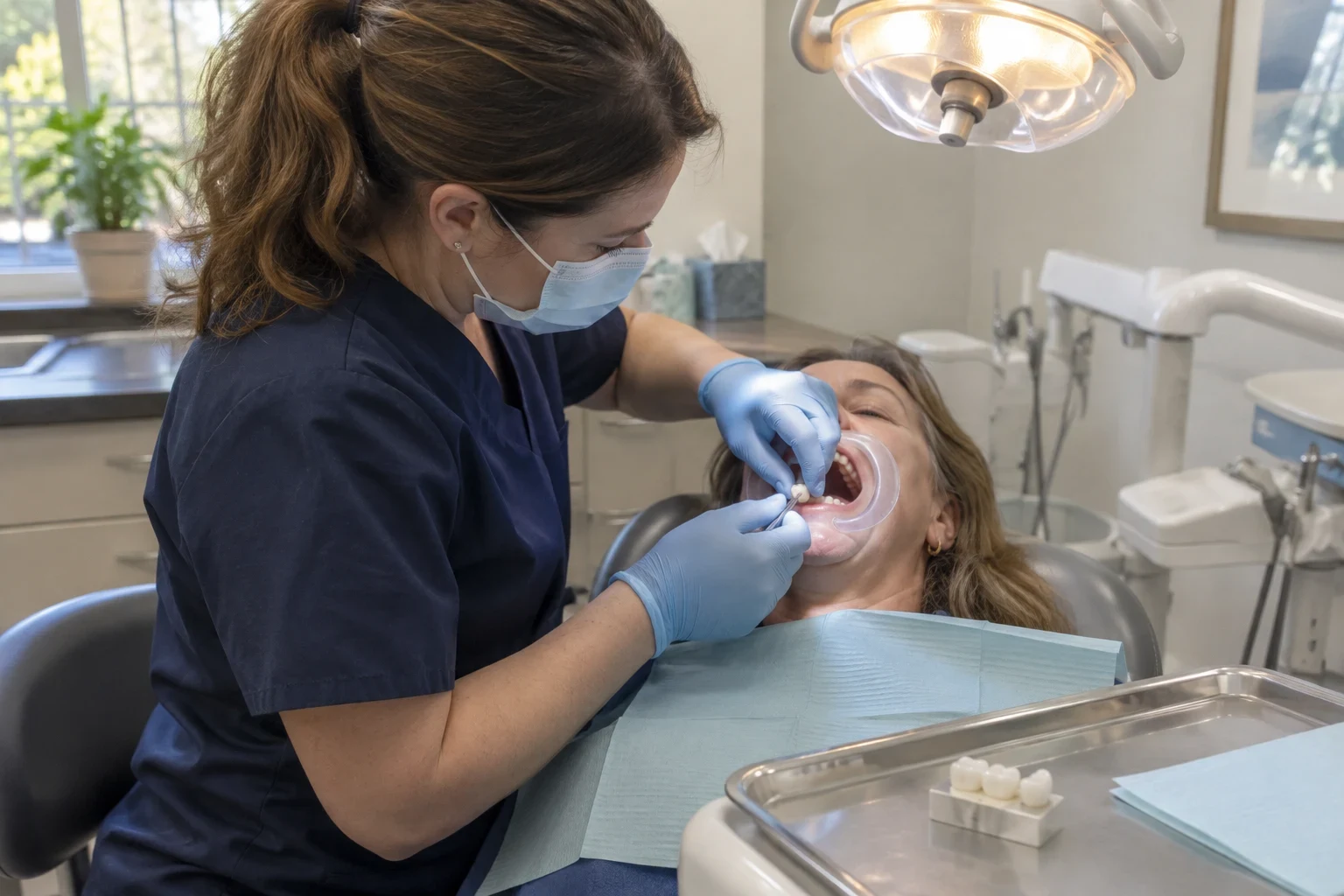
After numbing the area, we gently shape the tooth so the crown has room to sit, take a precise impression and choose the shade. Plan on being with us for a little longer than a routine cleaning. You go home wearing a temporary.
- 3
Lab work and updates
The final crown or bridge is made to the impression. If lab timing changes, we call you with the new date rather than leaving you to find out at the front desk.
- 4
Fitting and cementing
We remove the temporary, try in the final piece, check fit, contact and bite, then cement it in place. Most patients return to normal eating the same day, and we see you again at your next exam and cleaning to check the margins.
What affects the cost of a crown or bridge
We price each crown and bridge after the exam and X-rays, once we have seen the tooth and what surrounds it. Most dental insurance plans are accepted here, and we can walk you through what yours is likely to pay toward the work. Patients without coverage can ask about our Office Dental Plan, and if you would rather spread the balance over time, financing through the CareCredit Patient Payment Plan is an option.
- Crown or bridge
- A single crown covers one tooth. A bridge involves at least three units, two supporting crowns and the replacement tooth, so it is a larger piece of lab work.
- Material
- All-ceramic, zirconia and metal-supported restorations differ in cost as well as in strength and appearance. We explain why we suggest one for your tooth.
- What is under the old filling
- Some teeth need a core buildup to rebuild missing structure before a crown can be fitted. We often only know for sure once old filling material is removed, and we tell you before adding anything.
- Your insurance plan
- Plans differ in how they treat crowns, waiting periods and annual maximums. We go through your benefits with you so the remaining balance is clear before treatment starts.
Crown and bridge questions
Something not covered here? (508) 709-1264
How long will I wear the temporary crown?
Usually a few weeks while the lab makes the final restoration. We give you the fitting date at the preparation visit. If it moves, we call you with the new date.
Does getting a crown hurt?
The tooth is fully numbed during preparation, so most patients feel pressure rather than pain. Some mild sensitivity to cold for a few days afterward is common and fades as the tooth settles.
What can I eat with a temporary?
Most foods are fine. We suggest avoiding sticky candy, gum and very hard foods on that side, and sliding floss out sideways instead of pulling it up so the temporary stays seated.
How long does a crown last?
With good brushing, flossing and regular exams and cleanings, crowns commonly last many years. The edge where the crown meets the tooth can still decay, so we check it at every visit.
Should I choose a bridge or leave the gap?
A gap is not always urgent, but teeth tend to drift into it over time, which can change your bite. At the consultation we look at your specific situation and give you an honest view of what waiting would mean.
Set your crown or bridge visits
One phone call puts your consultation on the calendar. We will explain how the visits fit together and when to expect your final restoration.