ServicesExtractions
Extractions in Shrewsbury, MA
Some teeth can't be rescued with a filling or a crown. For those, we take the tooth out carefully, give you an honest sense of chair time and recovery before we start, and talk through what can fill the space for your smile afterward.
When removing a tooth is the right call
We save teeth whenever saving them makes sense. A filling, a crown or a root canal often keeps a tooth working for years. Extraction is for the cases where it won't: a tooth cracked below the gumline, decay that has reached too far into the root, a baby tooth that refuses to let go, or a tooth crowding its neighbors.
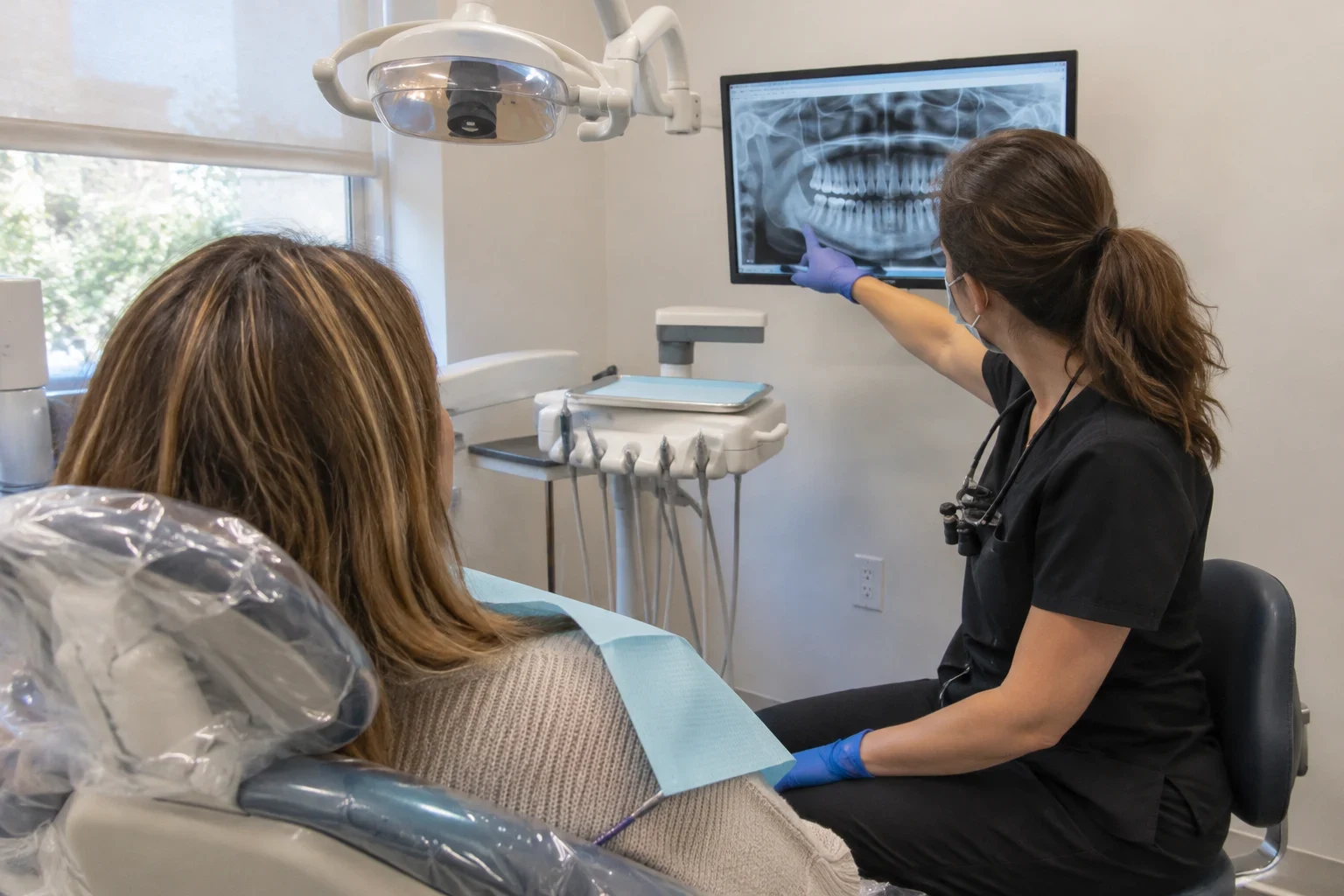
Before we recommend removal, we show you what we see on the X-ray and explain why repair isn't a good bet. If there's a reasonable way to keep the tooth, we'll say so plainly.
We also tell you how long the appointment will take and how much of the next few days to keep light. Most people plan around work, school pickup or a family schedule, and an honest time estimate matters as much as the procedure itself.
What your extraction includes
- Exam and X-rays first
- We check the root shape, the surrounding bone and how near the tooth sits to nerves or the sinus. That tells us whether removal will be simple or need more time.
- Complete numbing
- Local anesthetic goes in, and we confirm the area is fully numb before any work starts. Lift a hand at any point and we pause.
- An approach matched to the tooth
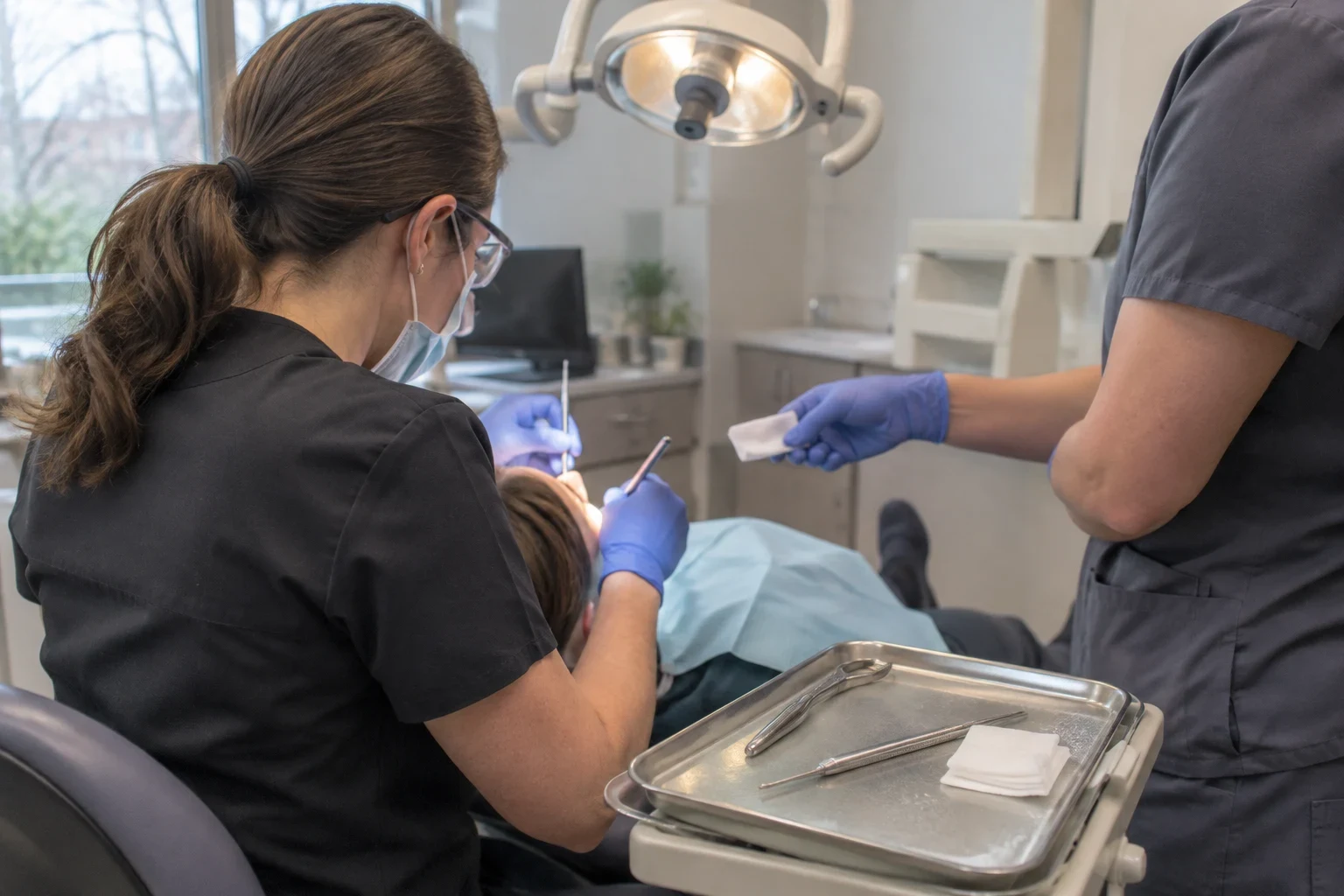
- When the whole tooth sits above the gum, we loosen it gradually and lift it out intact. If it has broken off or is partly buried, we may open the gum slightly or divide the tooth into pieces. That takes longer, but it spares the bone around it.
- Socket care before you leave
- We clean the site, place gauze and add stitches if the opening calls for them. You stay with us a few minutes until the bleeding settles.
- Written aftercare
- You leave with clear notes on eating, rinsing and pain relief, plus what is normal on day two compared with day five, so nothing catches you off guard.
Signs it may be time to remove a tooth
A split reaching the root
A crack that stays above the gum can often be covered with a crown. When the fracture travels down into the root, the tooth rarely holds together.
Deep decay or repeat infection
Swelling, a small bump on the gum, or pain that comes back after treatment can mean the tooth can no longer be saved. Mention any swelling when you phone so we can plan the visit around it.
A loose adult tooth
Advanced gum disease can leave too little bone to anchor a tooth. Removing it sometimes protects the teeth on either side.
Crowding or a stubborn baby tooth
A baby tooth that stays put while the adult tooth grows in behind it, or crowding ahead of orthodontic work, are common reasons for a planned extraction in kids and teens.
What shapes the price of an extraction
We set the price after the exam, once the X-ray shows how much work the tooth will need. You hear the cost before treatment starts, along with what your insurance is likely to pick up. Payment options include most dental insurance plans, our Office Dental Plan for patients without insurance, and the CareCredit Patient Payment Plan.
One piece or several
A tooth we can lift out whole needs less chair time than one we have to divide and remove in parts. Roots that curve sharply or have fused to the bone add time as well.
Where the tooth sits
Molars at the back have more roots and are harder to reach, so they usually take longer than front teeth.
Infection and bone health
An active infection or thin bone can mean extra steps, such as clearing the infection first or preserving the socket for later.
Your plan's benefits
Coverage for extractions varies from plan to plan. We look up your benefits ahead of time so the figure we give you is close to your real share.
How the visit runs
- 1
Booking with a real time estimate
When you phone, we ask what's going on and set an appointment long enough for the exam, X-rays and, when appropriate, the extraction itself. We tell you roughly how long to block off.
- 2
Exam and a plain-language plan
We review the X-ray with you, explain simple versus surgical removal, and go over cost before anything starts. If the case turns out more involved than expected, we tell you and adjust the timing rather than rushing.
- 3
The extraction
After numbing, most simple extractions take only a short while in the chair. Surgical cases take longer, and we keep you updated as we go.
- 4
Recovery and follow-up
Expect a few days of soreness and soft foods. If stitches need removing or the site needs a check, we schedule that before you leave, and we talk through replacement options such as a bridge when the gap matters for chewing or appearance.
Extraction questions we hear often
Does a tooth extraction hurt?
The extraction itself shouldn't hurt once you're numb; most people describe firm pressure. Soreness afterward is normal for a few days and usually responds to the pain relief we recommend. If pain gets worse after day three, phone us so we can check for a dry socket.
How long should I take off work or school?
For a simple extraction, many people return to normal activity the next day. Surgical removal may call for a day or two of rest. We give you a realistic estimate at the exam so you can plan.
Can my child have a baby tooth removed here?
Yes. We remove baby teeth that are badly decayed or blocking an adult tooth, and we take extra time to explain each step to your child. Our Kids' Dentistry page covers how we approach young patients.
Do I need to replace the tooth?
Not always. A missing back tooth can let neighbors drift and affect your bite, so we'll talk through whether a bridge makes sense. For crowding cases in kids, the space is often part of the orthodontic plan.
What should I eat afterward?
Stick to soft, cool foods like yogurt, eggs and soup for the first day or two. Skip straws and smoking, because suction can loosen the clot that protects the socket.
Ready to plan your extraction?
Tell us what's bothering you and we'll set an appointment with enough time to examine the tooth and explain your options. Patients come to us from Shrewsbury, Worcester, Westborough and nearby towns.